

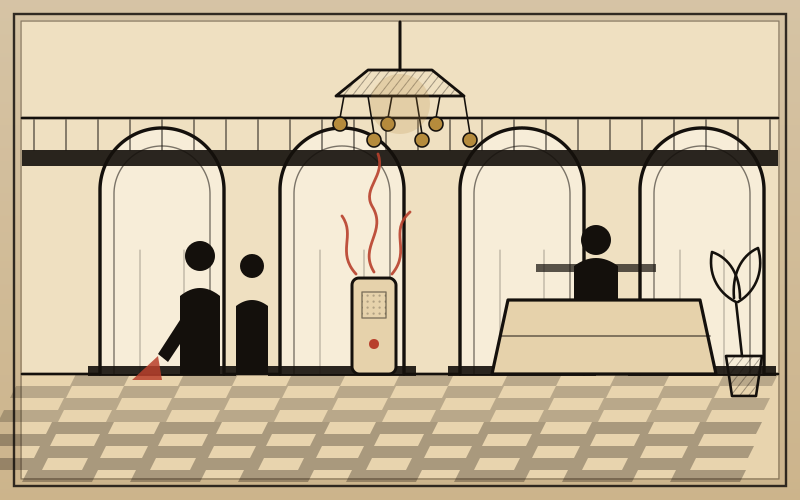
Smell has unusually close relationships with memory and emotion, but that does not mean every scented environment becomes memorable. Research supports the emotional and evocative character of odour-cued memory; the commercial challenge is turning that possibility into an experience that remains appropriate and consistent.
1. Translate the brand into atmosphere
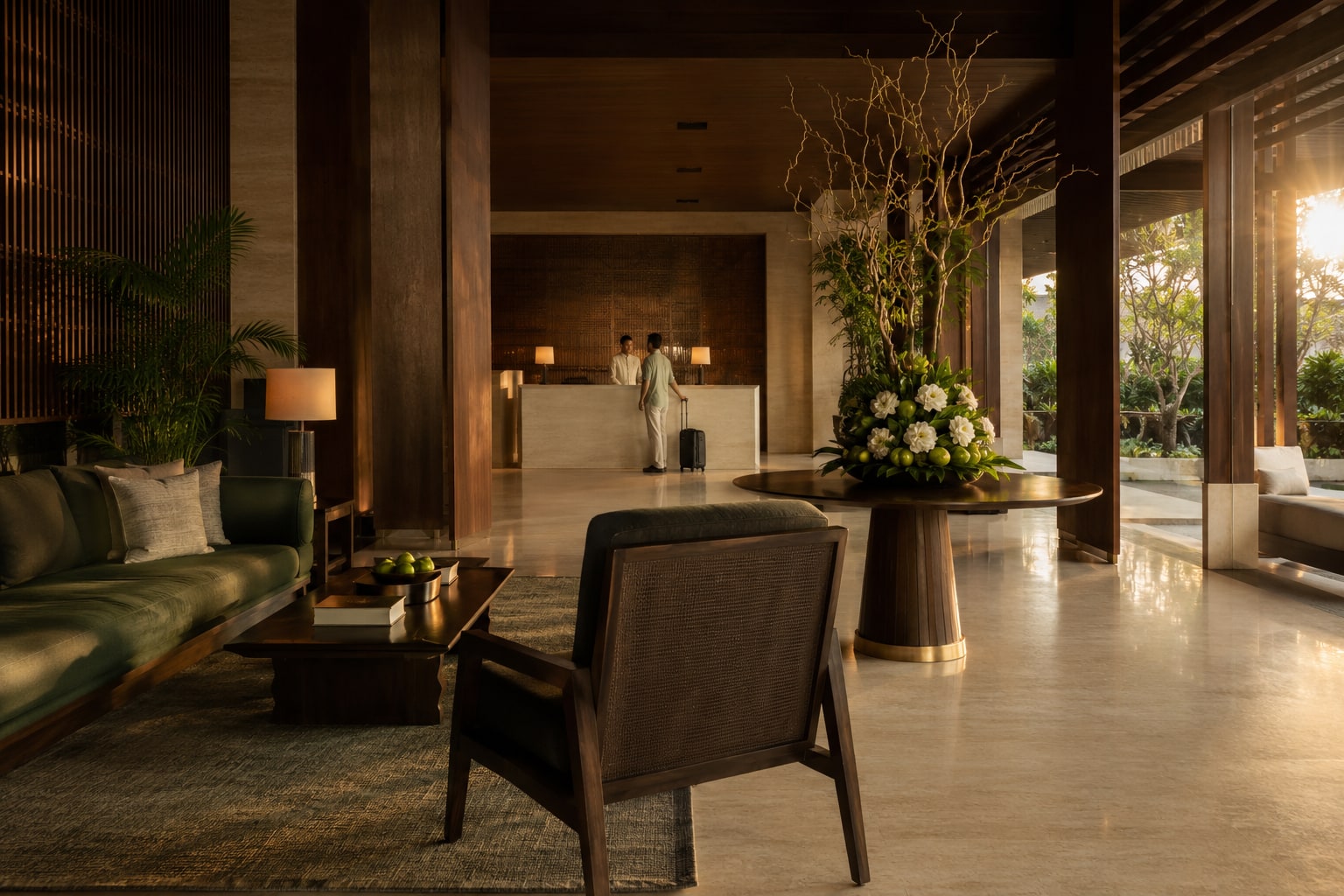
Avoid beginning with ingredient names. Begin with three or four words that describe how the space should feel: composed, bright, warm, generous, fresh, intimate, celebratory or grounded. Then remove contradictions. A quiet premium hotel lobby and a high-energy café should not receive the same brief merely because both owners “like floral scents.”
Weak brief: “something strong that everyone notices.”
2. Map the guest journey
The entrance creates recognition, but it may not be where people spend the most time. Mark arrival, waiting, browsing, dining, corridors, washrooms and work zones. Decide where scent should introduce the brand, where it should remain gentle and where it should not appear at all.
Hotels and banquets
Prioritise the arrival sequence and connected guest-facing zones. Banquet schedules may require different timing from the everyday lobby.
Restaurants and cafés
Fragrance must not compete with food. Entrances, waiting areas and washroom approaches often require more restraint and separation than a retail floor.
Offices
Reception can carry more identity than focused work areas. Staff exposure is much longer than visitor exposure, so sustained comfort matters.
3. Choose a fragrance direction, not just a favourite
Bright citrus can read as clean and energetic. Soft florals can feel composed or welcoming. Woods can feel grounding and quietly premium. Gourmand notes can create warmth and familiarity. These are directions, not universal emotional guarantees: context, culture, intensity and personal association change perception.
Test a small shortlist in the actual space. Paper blotters and bottle smelling cannot reproduce diffusion, airflow or hours of exposure.
4. Design for restraint
The goal is recognition without intrusion. Begin low, test across a working day, then tune in small increments. Ask both first-time visitors and staff. Visitors reveal the first impression; staff reveal fatigue or inconsistency.
Do not solve weak distribution by increasing every zone. Revisit machine position, airflow and timing first.
5. Protect consistency operationally
A signature disappears when refills arrive late, settings change randomly or a machine remains inactive. Record the selected fragrance, machine position, schedule and agreed intensity. Plan replenishment from actual consumption and assign responsibility for checks and support.
6. Measure useful signals
Avoid pretending scent alone caused a sales increase. Instead track signals that can guide the program:
- visitor and staff feedback by zone;
- complaints about strength or weak coverage;
- consumption versus operating hours;
- downtime or missed refills;
- repeat requests for the fragrance name;
- for controlled pilots, comparable experience or dwell-time measures where available.
Use a short pilot to learn, not to manufacture a dramatic statistic.
7. Ask for the right safety documentation
IFRA describes its Standards as a risk-management system that can restrict or prohibit certain fragrance materials for defined uses. An IFRA Certificate of Conformity is supplied for a fragrance mixture and intended use; IFRA itself does not issue the certificate, and the certificate does not replace a safety assessment. Ask for documents that apply to the exact fragrance and use rather than relying on a generic badge.
Start with a one-line scent brief
Send us the business type, city, area, operating hours and three words describing the desired atmosphere. Garden of Zen can then match a fragrance direction, diffuser arrangement and support plan for the actual environment.