

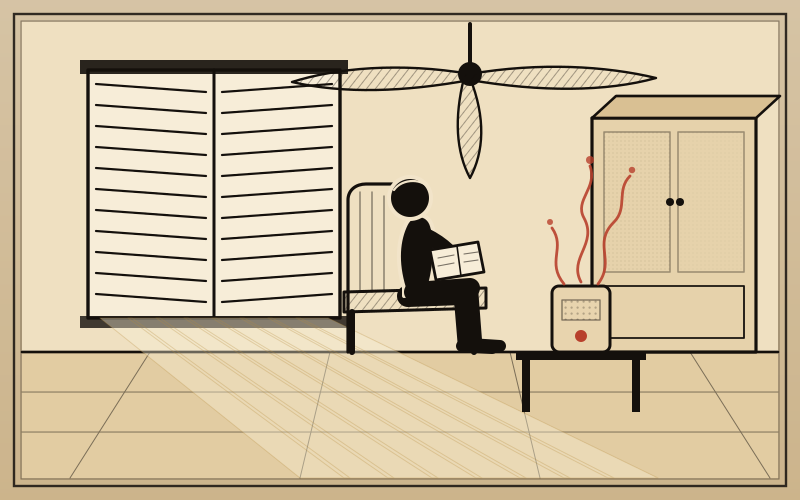
A commercial scent diffuser has one job: keep the atmosphere consistent without making people feel that a fragrance machine is working. That depends on far more than floor area.
Two spaces can both measure 2,000 sq. ft. and need completely different systems. One may be a closed office with a low ceiling and controlled air-conditioning. The other may be a restaurant with an open entrance, strong exhaust and constant footfall. Treating them as identical usually produces weak zones, overpowering zones or unnecessary oil consumption.
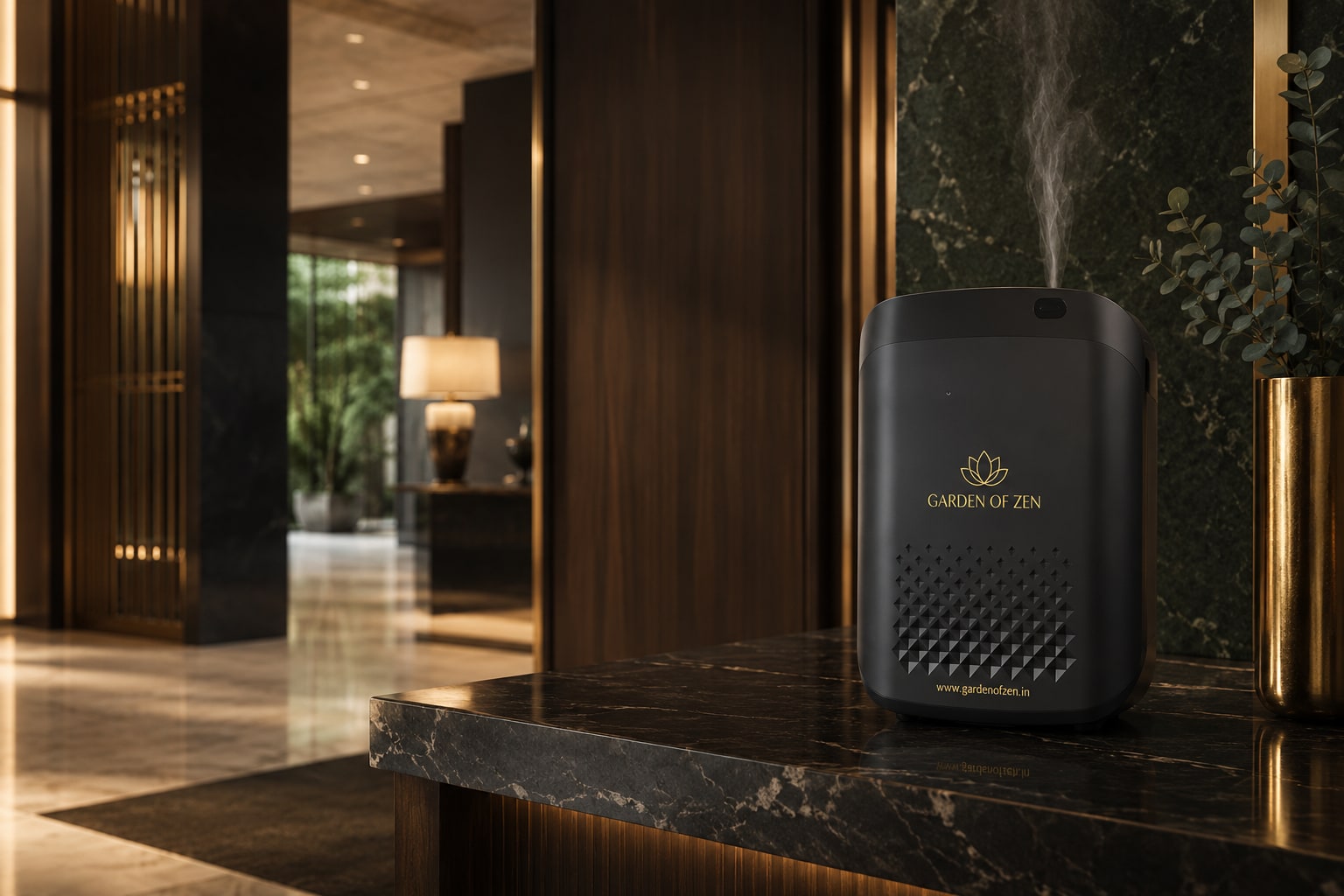
1. Start with a proper space brief
Before comparing machines, collect six facts:
- usable area to be scented, not the entire property area;
- ceiling height and whether the space is open across multiple levels;
- doors, windows, exhaust systems and strong cross-ventilation;
- air-conditioning type and operating schedule;
- daily business hours and changes in footfall;
- the guest journey: entrance, reception, waiting zone, tables, corridors or work areas.
2. Decide whether one zone or several zones matter
A lobby, washroom corridor and banquet entrance may belong to the same property but should not automatically receive the same intensity or fragrance. One large machine placed centrally may be less effective than two smaller, independently controlled zones.
Map where the first impression happens, where people remain longest and where strong exhaust removes fragrance quickly. This prevents the common mistake of increasing the entire system merely to solve one weak corner.
3. Match the system to the air
Standalone or wall-mounted diffusion
Useful for defined zones, faster installation and independent control. Placement needs care: hiding a machine behind furniture or directly beside an open door can reduce effective distribution.
HVAC-integrated diffusion
Useful when central air can distribute fragrance across a larger connected environment. Suitability depends on the HVAC layout, return/supply path, zoning and access for installation and maintenance. Read our HVAC versus standalone comparison before deciding.
4. Read specifications as a group
Do not judge a machine by maximum area alone. Ask for the recommended coverage range, oil reservoir, noise level, controls, power requirement, installation format, HVAC compatibility and service access. A compact silent unit may be better for a premium reception; a larger reservoir may matter more for a long operating schedule.
5. Select fragrance and intensity together
A stronger-smelling oil is not a substitute for the correct machine. Fragrance character, concentration, diffusion timing and airflow work together. Begin at a restrained setting, observe the space across a full working day and adjust gradually.
The best result is noticeable when someone enters, then settles into the background. Constantly increasing intensity can create fatigue for staff who spend the whole day there.
6. Plan refills and support before installation
Consumption depends on runtime, output setting, machine type and environmental losses. A commercial plan should establish who checks the unit, how refill timing is estimated, what happens if usage changes and how faults are handled. Operational continuity is part of the scent experience.
A better recommendation in five minutes
Send Garden of Zen your business type, city, approximate usable area, operating hours and ventilation or HVAC details. Photographs or a basic floor plan can make the first recommendation more useful. We keep commercial prices private because the machine, usage and service plan should follow the actual site.