

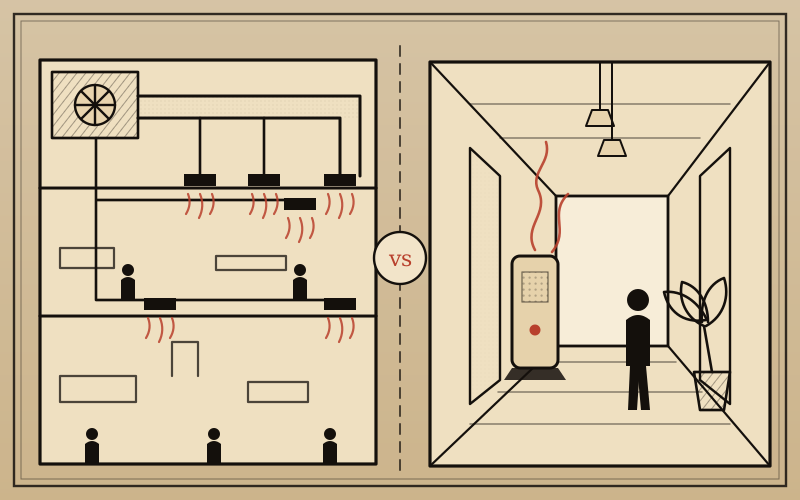
The phrase “large space” often pushes buyers directly towards HVAC scenting. That can be correct, but size alone is not enough. A venue may have central air that serves unsuitable zones, separate air-handling units, inaccessible ducts or operating schedules that do not match the customer journey.
The basic difference
A standalone diffuser releases fragrance from its own location into a defined area. It may sit on a surface, stand on the floor or mount to a wall. An HVAC-compatible system introduces fragrance into an appropriate air path so the building's airflow helps distribute it.
When HVAC scenting makes sense
- a connected lobby, retail floor or common area is already served evenly by central air;
- the scent should remain visually discreet;
- wide, consistent distribution matters more than independent micro-zones;
- the duct or air-handling layout can be assessed and accessed safely;
- facilities and scenting teams can coordinate installation and maintenance.
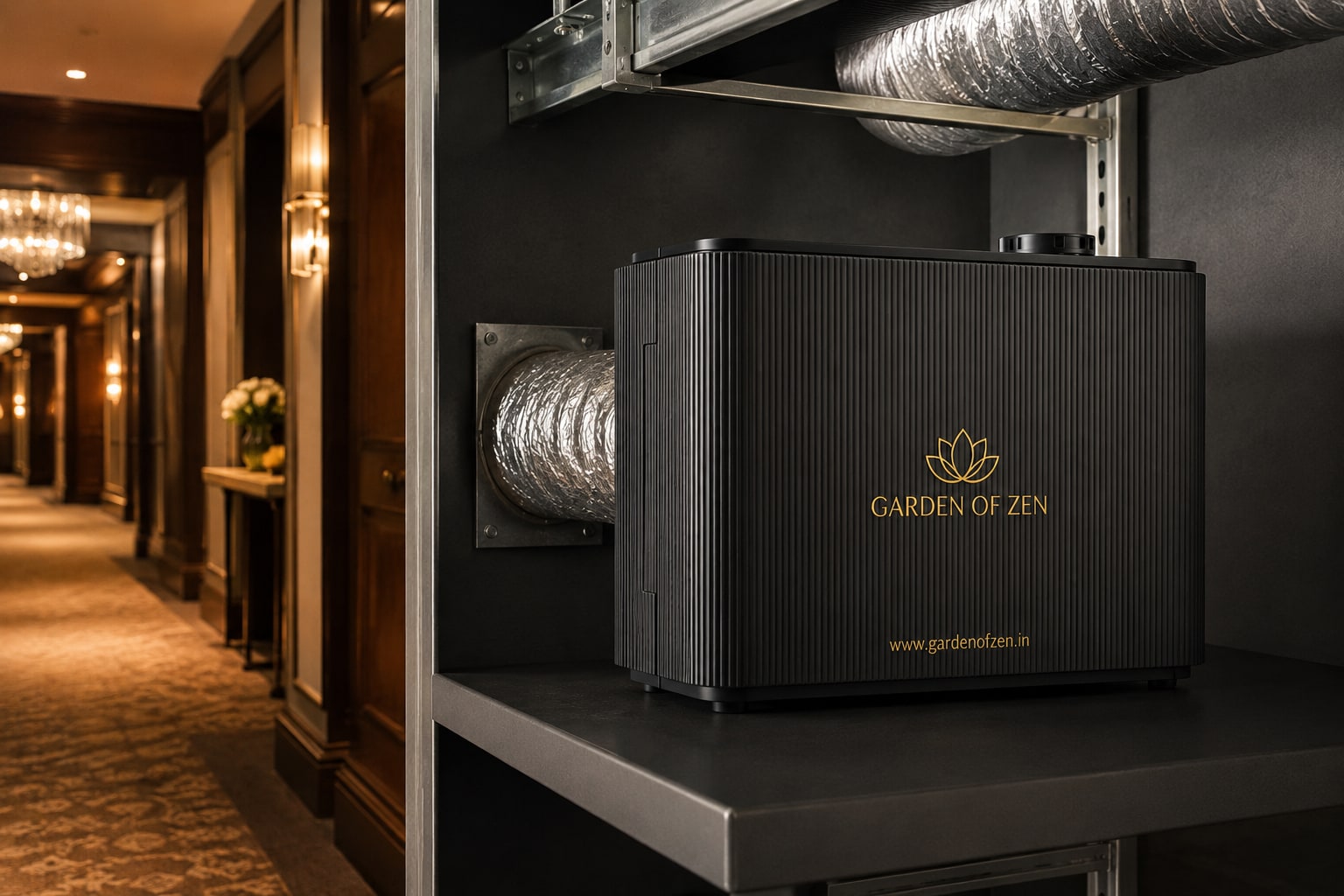
HVAC integration can distribute fragrance quietly across a broad environment, but only when the selected air path actually serves the intended guest areas. It should not be connected blindly to a system that also feeds kitchens, back-of-house zones or rooms requiring separate control.
When standalone diffusion is better
- you need to scent a reception, showroom, waiting area or defined floor independently;
- installation must be fast and minimally disruptive;
- different zones require different schedules or intensities;
- the property does not have suitable central air;
- the setup may be moved or expanded later.
Standalone machines make zoning easier and often simplify testing. Their success depends heavily on placement: they should work with natural or conditioned airflow, not fight an exhaust or sit hidden behind an obstruction.
Compare the operational questions
Coverage
HVAC can suit wide connected areas; standalone units can cover defined areas or work as a coordinated multi-zone system. Ask for a recommended range, not only a maximum number.
Control
Standalone units usually make local schedules easier. HVAC systems can provide broad distribution but may require zoning decisions around the building's air system.
Installation
Standalone installation is generally simpler. HVAC integration requires an appropriate connection point, technical access and coordination with the site.
Maintenance
Both require refill planning and cleaning or service. The best installation leaves the machine accessible without disrupting the guest experience.
Failure isolation
One standalone unit can be serviced without affecting other zones. A central system may influence a wider area, which makes maintenance response and access planning important.
A hybrid plan may be the real answer
A hotel could use HVAC scenting for its main lobby and a standalone unit for a banquet entrance. A retail business may scent its primary floor centrally while using a smaller independent unit in a VIP lounge. The goal is not to force one technology across every zone.
What Garden of Zen needs to recommend a system
Share the usable area, ceiling height, photos or plan, operating hours, intended scent zones and basic HVAC information. We can then discuss whether GOZ Atmos or a standalone GOZ Mist or Breeze arrangement fits the space. Prices remain off the public page because the useful answer depends on installation, consumption and support.