

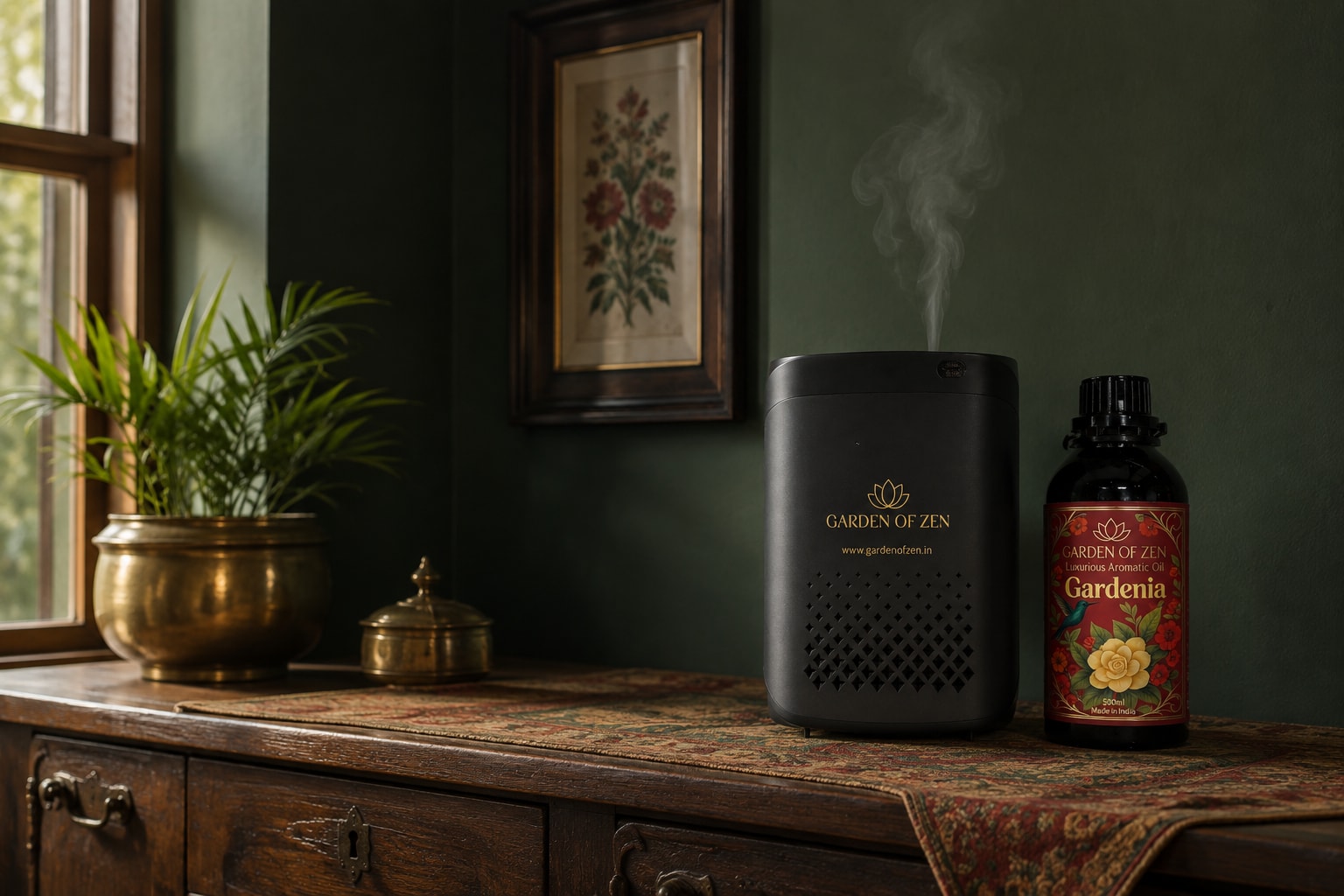
1. Check what your diffuser accepts
A waterless scent diffuser atomises compatible aroma oil directly. An ultrasonic diffuser normally uses water and only the quantity permitted by its manufacturer. Never assume that every oil can be poured into every machine: thick or incompatible liquids can clog a nozzle, damage seals or create an uneven mist.
2. Start below your final intensity
Run the lowest practical setting, leave the space, and return after ten minutes. Increase gradually. People inside a room become nose-blind and often turn the machine up too far; re-entering gives a more honest reading.
3. Place it where air can carry the scent
Keep the outlet unobstructed and away from a wall, curtain or shelf that catches the mist. Avoid placing a unit directly beside someone’s seat. In a larger room, gentle air movement distributes fragrance better than simply increasing output in a dead corner.
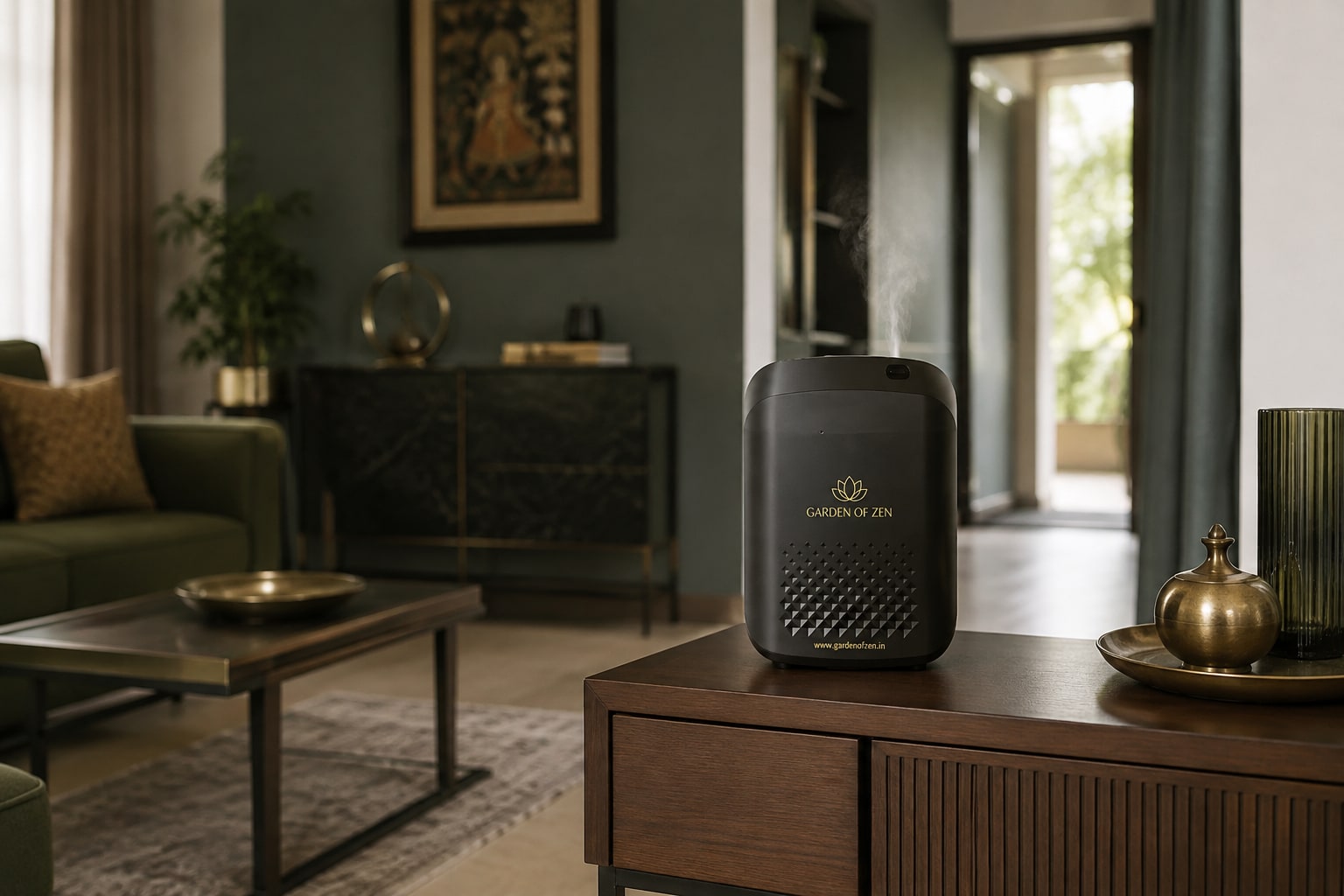
4. Use intervals instead of constant output
A repeating on/off schedule lets fragrance settle between bursts and generally feels more natural than continuous spraying. Start conservatively, then adjust for room volume, ceiling height, open doors, ventilation and operating hours.
5. Keep the fragrance path clean
Switch off and unplug the diffuser before cleaning. Wipe spills promptly and follow the machine maker’s cleaning method for the bottle, tube and nozzle. Do not mix water or an unrelated oil into a waterless commercial unit.
6. Use ordinary fragrance precautions
Do not ingest fragrance oil or apply it to skin. Keep bottles away from children, pets, flame and direct heat. Ventilate the room if anyone finds the fragrance uncomfortable, and stop use if irritation occurs.
- US FDA: Aromatherapy products and the boundary between fragrance and medical claims.
- National Capital Poison Center: Essential oils are hazardous when swallowed or misused.
- US EPA: Technical overview of volatile organic compounds indoors.
- Pellegrino et al.: Human olfactory adaptation during repeated odour exposure.